

For teams who run postmortems
The incident is over. The action items aren't.
The postmortem produced seven action items with owners and everything. Two weeks later Mike asks: "didn't we say we'd add that alert?" Three of the seven made it into Jira. The other four live in a doc nobody reopens. If you just need the checklist, it's below — take it.
 Lin · Friday 3:05pm
postmortem doc is final — 7 actions, owners assigned ✍️
Lin · Friday 3:05pm
postmortem doc is final — 7 actions, owners assigned ✍️
 Mike · two weeks later
didn't we say we'd add the alert after INC-42?
Mike · two weeks later
didn't we say we'd add the alert after INC-42?
○ in the doc — not in the tracker
thread staged with our recurring cast
01 · What Ayven does with the same postmortem
Every action item becomes an ask with an owner.
With your Google Drive or Notion connected, point Ayven at the finaled postmortem — she opens it and takes the list from there, or you paste the items in. From there it's into the tracker, onto each owner's plate, alive until the tracker says it's finished. Filing is approval-gated: she proposes, you sign off. The chasing is hers.
02 · The register
"Done" gets checked in the tracker before it's believed.
 Ayven APP · Tuesday 4:20pm
The alert from INC-42's postmortem shipped — the owner said done, so I checked Jira before marking it. That's the fourth of seven closed; three still open, each with its next follow-up scheduled.
Ayven APP · Tuesday 4:20pm
The alert from INC-42's postmortem shipped — the owner said done, so I checked Jira before marking it. That's the fourth of seven closed; three still open, each with its next follow-up scheduled.
verified in the tracker — not claimed in a doc
03 · It's real
The product, not a promise.
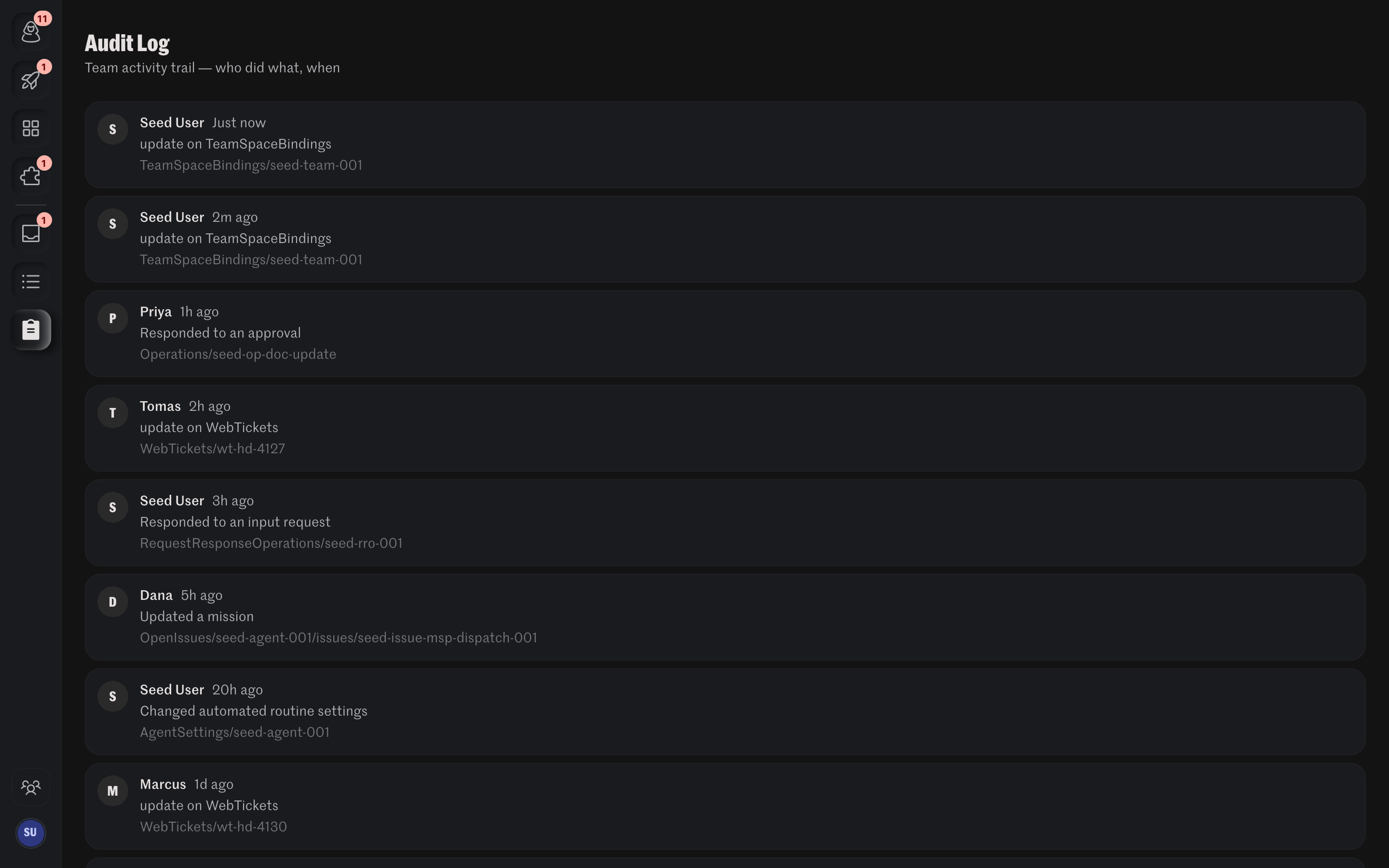
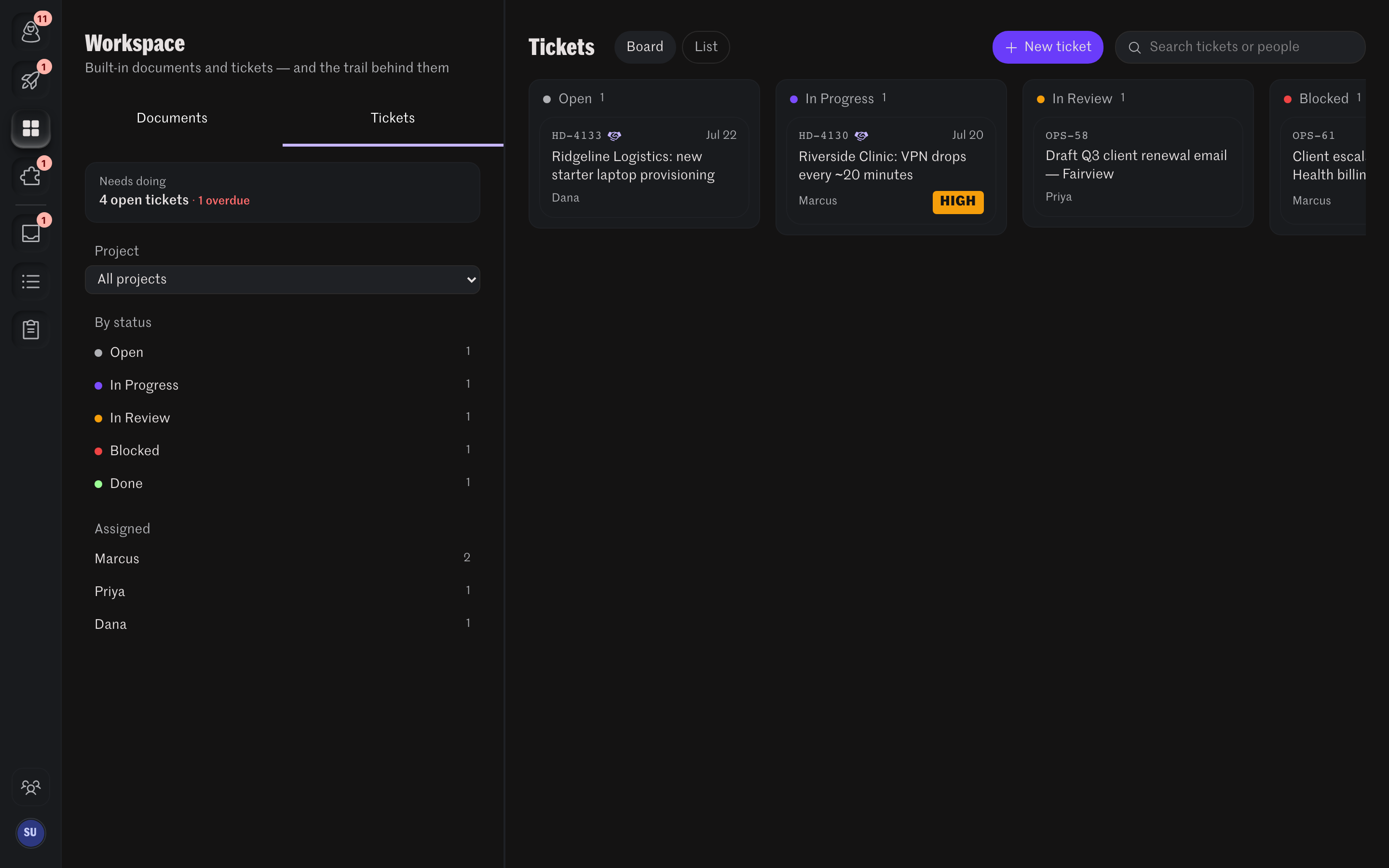
threads shown are staged with our recurring cast · screenshots are the live product
04 · The honest answer
Your incident tooling closes the incident.
It's good at that. What it doesn't carry is the after: the remediations, the alert that was promised, the runbook fix. Those die in the doc because the incident stopped hurting. Ayven treats every action item as an ask with an owner — chases it, checks Jira before believing "done," and keeps the list alive until the tracker says it's finished.
05 · The checklist, if that's all you need
The post-incident checklist — the part after the incident closes
Seven steps, in order. The postmortem doc is the input; the tracker is where it has to end up.
1. Capture every action item
Pull every action item out of the postmortem doc — not just the ones that felt urgent in the room. An item nobody wrote down is an item nobody's accountable for.
from the doc, all of them2. Give each one an owner
A name, not a team. "Platform" doesn't file a ticket; a person does — an action item without a named owner is a wish, not a plan.
a person, not a team3. File them to the tracker
Into Jira, YouTrack, or Asana, with the incident's context attached — approval-gated, so you sign off before anything's created.
approval-gated, you sign off4. Set a stop-waiting date
A pivot-by, not a deadline — the point where a quiet item stops sitting and gets a check-in instead of drifting another sprint.
pivot-by, not a deadline5. Mid-cycle check
Ask each quiet owner once, partway through — not a pile-on, and not silence until the pivot-by date arrives.
asked once, not repeated6. Escalate blocked items with context
Not blame. A stalled remediation gets the incident's history attached and goes to someone who can actually unblock it.
context, not blame7. Close only when the tracker shows it
"Done" in chat doesn't close the loop — the ticket's state has to actually change first, or the item stays open.
closed in the tracker, or not closedThe checklist is the easy part. Ayven is the part that carries it.
Close the incident. Then finish it.
Start freeshe files the actions with owners attached · chases each one · verifies done in the tracker