

For whoever runs the retro
Same blocker as last retro. Same promise, too.
The meeting went fine. Then the output of the meeting went where it always goes. If you need a format, it's below — take it. But if the same complaints resurface retro after retro, the format was not the problem. The action items are.
 Lin · retro, sprint 14
deploys are still breaking the same way as last month
Lin · retro, sprint 14
deploys are still breaking the same way as last month
 Mike · retro, sprint 14
wait — didn't we have an action item for this?
Mike · retro, sprint 14
wait — didn't we have an action item for this?
○ written down — not reopened since
thread staged with our recurring cast
01 · What Ayven does with the action items
Each action leaves the retro as an open loop.
Attached to a person and a deadline, not floating in a column. Ayven checks in with each owner async in Slack and Teams — mid-sprint, when it can still change the sprint — and whatever's still open lands in the next retro as a composed digest.
02 · The register
"Yeah, I'll get to it" doesn't close a loop.
 Ayven APP · Friday 1:26pm
The checklist ticket closed and I checked the change is really there. What's still open goes into the next retro as a composed digest — the rerun conversation starts from the record, not from memory.
Ayven APP · Friday 1:26pm
The checklist ticket closed and I checked the change is really there. What's still open goes into the next retro as a composed digest — the rerun conversation starts from the record, not from memory.
no ticket? the loop still runs on the owner's answer — the tracker is verification, not a requirement
03 · It's real
The product, not a promise.
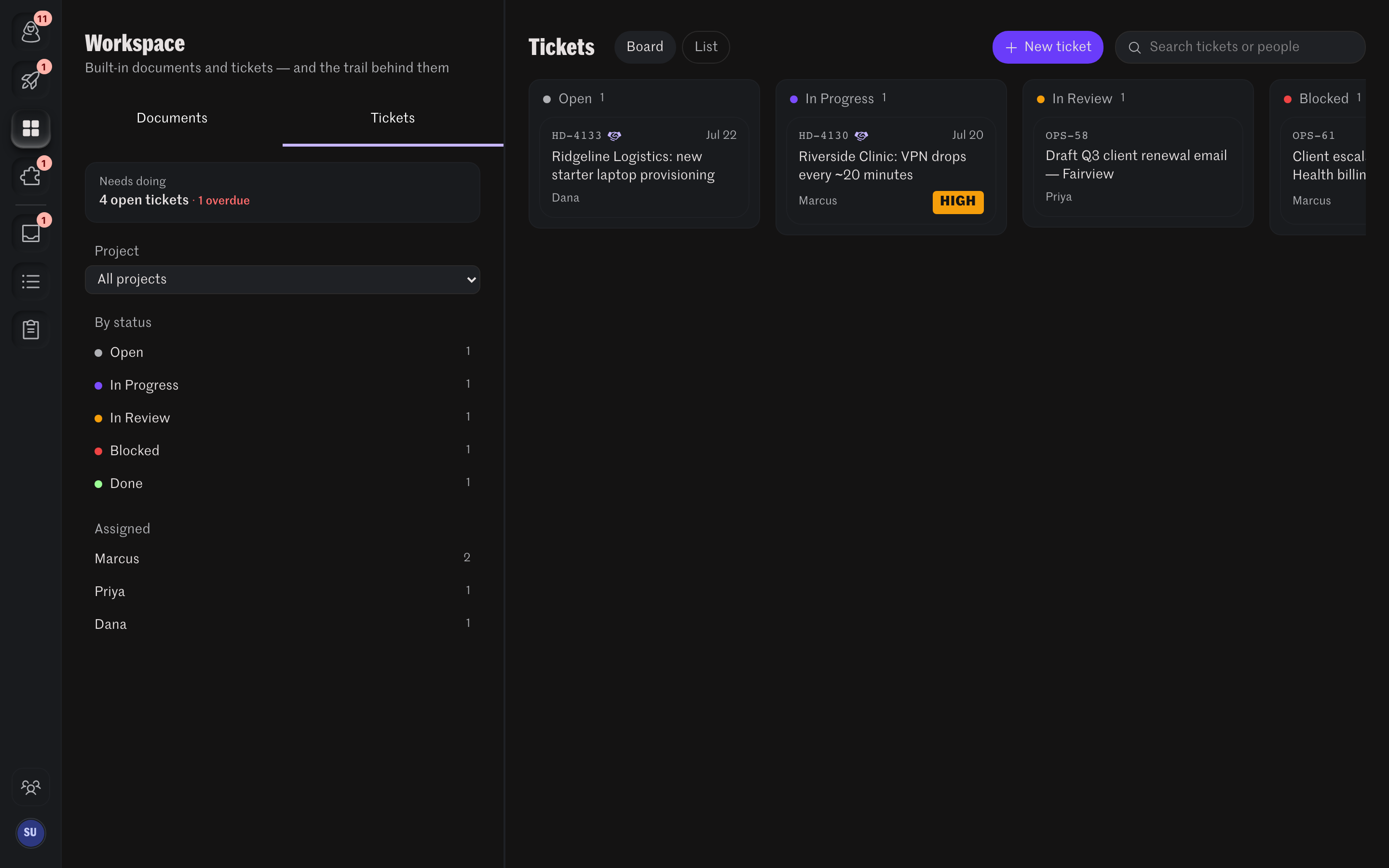
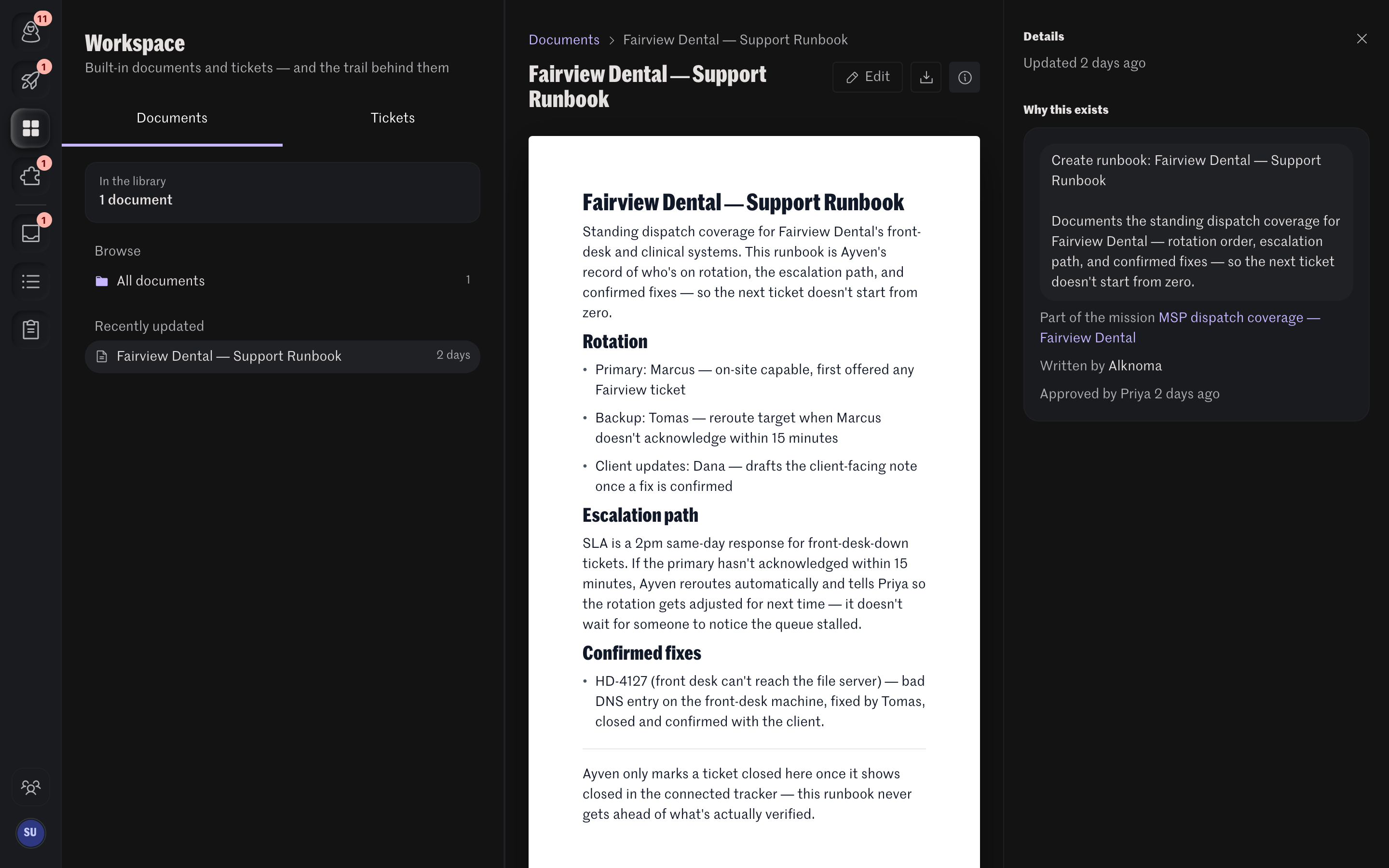
threads shown are staged with our recurring cast · screenshots are the live product
04 · The format, if that's all you need
Three columns. Keep it under an hour.
And keep the last column brutally short.
What went well
Specific things worth repeating — not vibes. "The staged rollout caught the bug before customers did" beats "good teamwork."
specifics, not vibesWhat didn't
Name the friction honestly, blame the process not the person. If the room won't say it out loud, collect this column anonymously beforehand.
process, not peopleActions
Three or fewer. Each one gets an owner and a date, written in the room — an action item without both is a wish. This column is the entire output of the meeting.
owner + date, or it's a wish"We already write the action items down."
So does every team whose retros repeat. Writing it down was the easy half — the half that dies is between the retros. A doc doesn't follow up, and chasing a peer's retro commitment is socially expensive — that's half the reason nobody does it. Ayven's follow-up happens because it's a routine, not because someone remembered to be the nag: when an owner goes quiet she checks the linked tracker where there is one, reroutes around an absence, or escalates with context — and a check-in from the team's workflow reads as process, spending no one's goodwill.
Run the same retro. Get different results.
Start freekeep your format · she takes the action items — owner, chase, verification, carry-over