

For whoever assembles the report
The report is due tomorrow. The answers aren't in.
Another week, another report assembled at 11pm — and the template was not what cost you the evening. The report's real cost is collecting the inputs. If you just need a one-off report, the structure is below — take it.
 Sarah · Thursday 6:15pm
team — exec report goes out tomorrow. can everyone send me their piece by tonight? 🙏
Sarah · Thursday 6:15pm
team — exec report goes out tomorrow. can everyone send me their piece by tonight? 🙏
○ 2 of 5 answered
thread staged with our recurring cast
01 · What Ayven does
Ayven runs the collection, not just the format.
The part that eats your evening — asking, chasing, assembling — becomes a routine Ayven runs in Slack and Teams. She asks each person individually, tracks who still owes what by when, and the gap is visible before the deadline, not at it.
02 · The register
The digest reports what's verified, not what was typed.
 Ayven APP · Thursday 4:44pm
Two progress items pointed at tickets, so I checked the tracker instead of pasting the claim. The digest went out on schedule — and the guessed paragraph is gone.
Ayven APP · Thursday 4:44pm
Two progress items pointed at tickets, so I checked the tracker instead of pasting the claim. The digest went out on schedule — and the guessed paragraph is gone.
no tracker linked? the loop still runs on people's answers
03 · It's real
The product, not a promise.
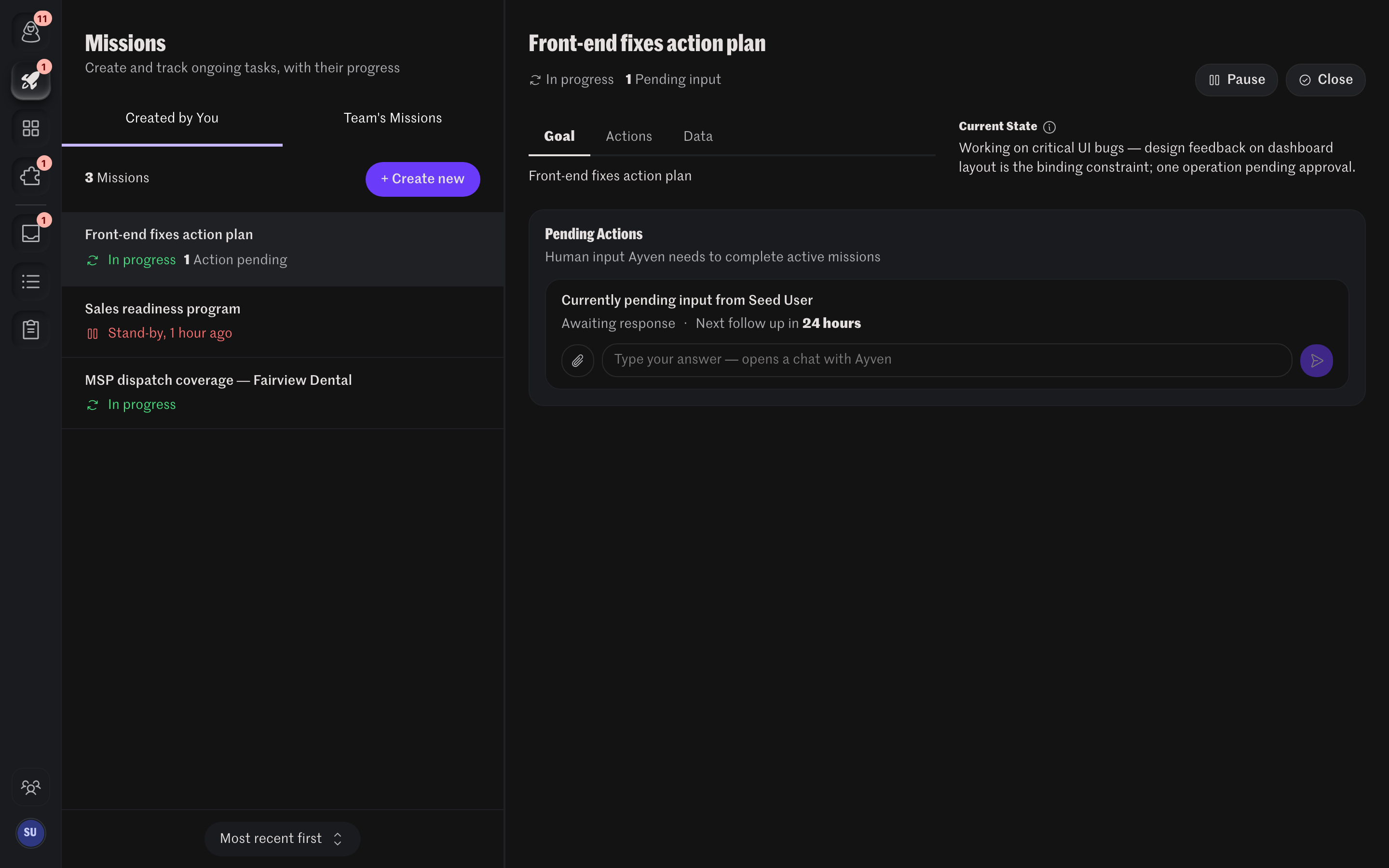
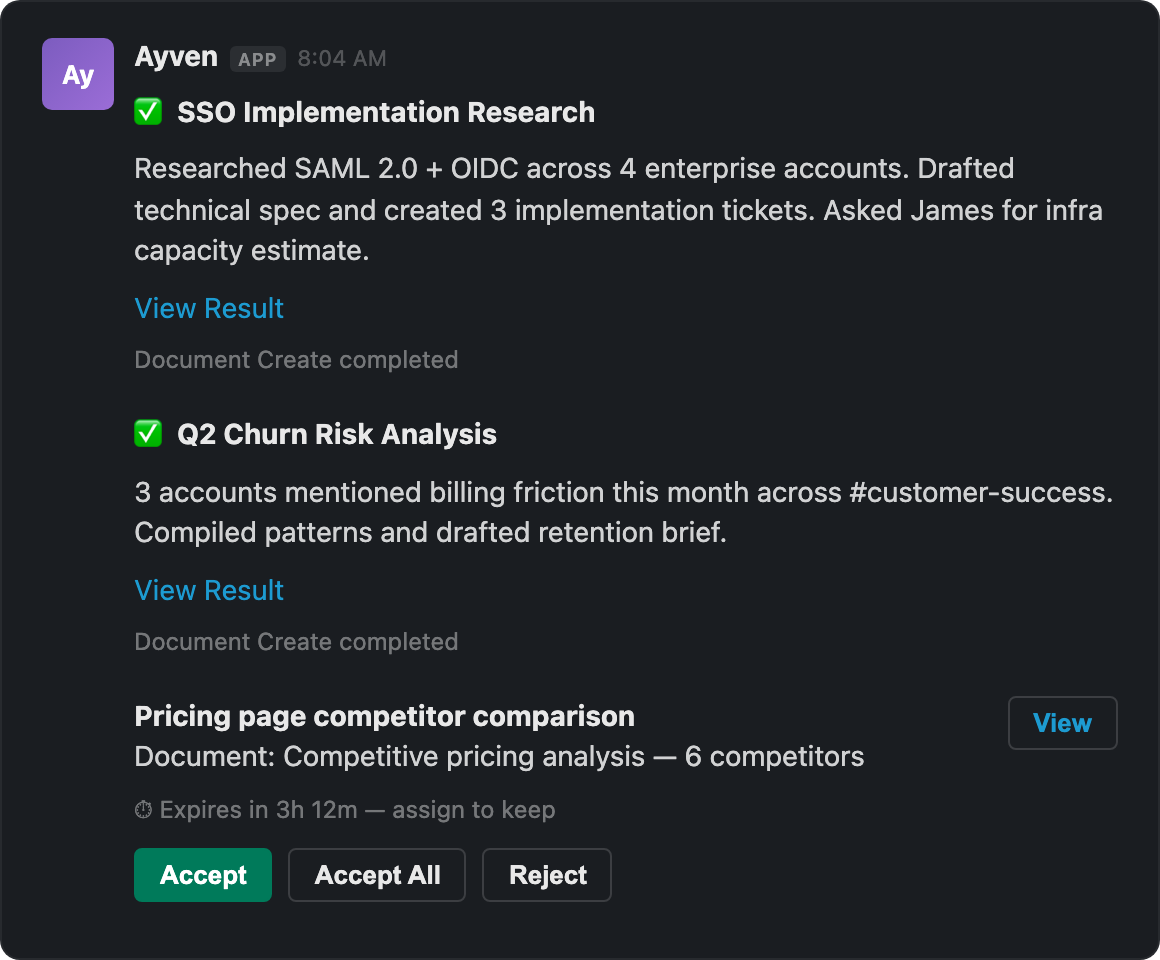
threads and digests shown are staged examples with our recurring cast
04 · The template, if that's all you need
Four sections, in this order.
Anything longer stops getting read.
1. Summary
Two or three sentences: on track or not, and why. Write it last, put it first — it's the only part some readers will see.
write last · put first2. Progress
What actually shipped or moved since the last report, tied to visible work — not activity, outcomes. Three to five bullets.
outcomes, not activity3. Risks & blockers
What could slip, what's already stuck, and what you need from the reader to unstick it. A risk with no ask is just an excuse filed early.
every risk carries an ask4. Next
What will be true by the next report — each item with an owner and a date. This section is the contract the next report gets graded against.
owner + date on every item"Can't I just send everyone a form?"
You can — and it works on the people who were going to answer anyway. The report's cost lives in the people who don't. A form waits politely for someone who's out all week; Ayven checks the linked tracker where there is one, reroutes around the absence, or escalates with context — and remembers what she already tried. And your third nudge reads as you being on someone's case, while the same check-in from the team's workflow reads as process — your teammate answers the routine, not you.
Keep the template. Lose the 11pm.
Start freeshe asks each person, chases the stragglers, and composes the digest · on a routine, in Slack and Teams