

For whoever owns the status
Green on the dashboard. Red in the room.
Every project on the board is green. Then someone says the quiet part in a side thread, and you realise the color was typed by the person doing the work — a self-report, not a fact. That's watermelon status: green skin, red inside. If all you want is the definition and the fix, it's below.
 Sarah · Monday 9:04am
🟢 Payments migration — on track for Friday, no blockers.
Sarah · Monday 9:04am
🟢 Payments migration — on track for Friday, no blockers.
○ green — self-reported
 Lin · 4:12pm · side thread
is it though? the reconciliation piece hasn't been started yet
Lin · 4:12pm · side thread
is it though? the reconciliation piece hasn't been started yet
thread staged with our recurring cast
01 · What Ayven does with the same green
She reads the tracker, not the color.
A status color is a claim. When the item points at tracked work, Ayven checks the linked ticket instead of taking the word for it — and where the color and the ticket disagree, she asks the owner before the report goes out, not after. The gap surfaces as amber-with-a-reason while there's still a week to fix it.
02 · The register
The status that ships is the one that's checked.
 Ayven APP · Thursday 9:12am
Two items were marked green. One pointed at a ticket that hadn't moved, so I checked the tracker instead of pasting the color. The board went out amber with the reason — not green with a surprise inside.
Ayven APP · Thursday 9:12am
Two items were marked green. One pointed at a ticket that hadn't moved, so I checked the tracker instead of pasting the color. The board went out amber with the reason — not green with a surprise inside.
a color is a claim · the ticket is the second opinion
03 · It's real
The product, not a promise.
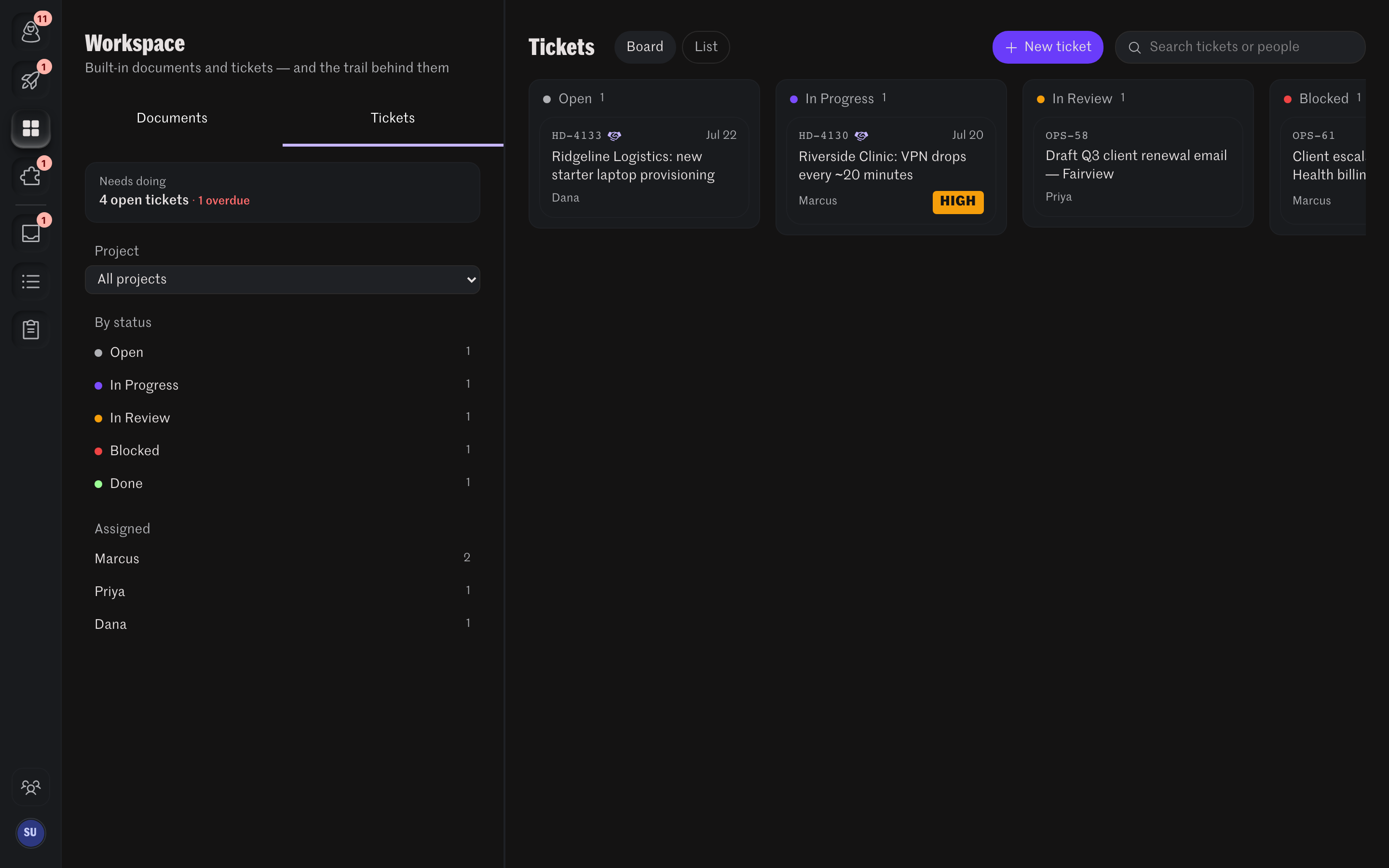
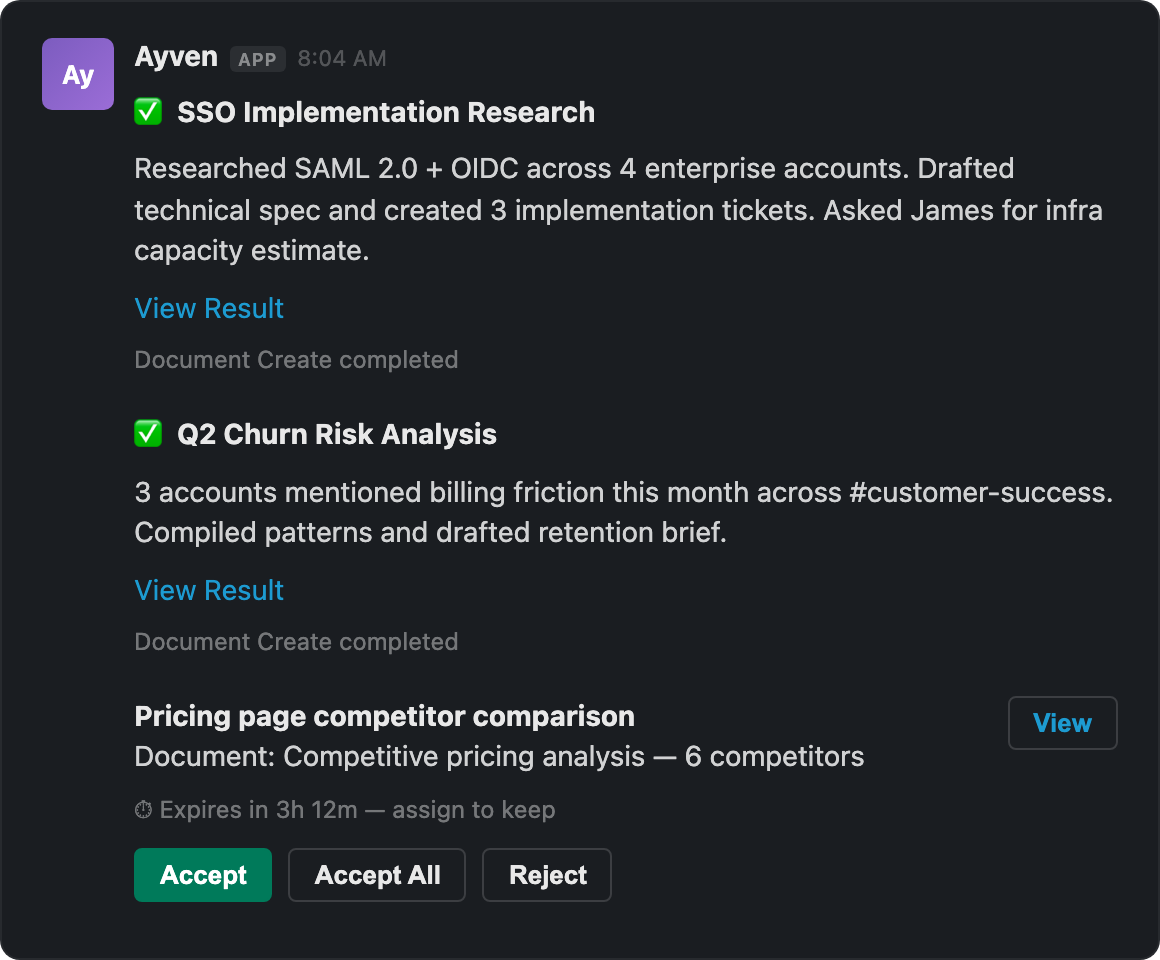
threads shown are staged with our recurring cast · screenshots are the live product
04 · The honest answer
Why status reports go green when the project is red.
Watermelon status isn't dishonesty — it's structure. The color is graded by the person doing the work, under pressure, before the hard part starts. No second opinion, no cost to optimism. Fixing it isn't a sterner dashboard; it's a check that runs on the work, and a chase that reads as process. If the input-collection is what eats your week, that's the status-report door.
Green is a self-report
A status color is typed by the person whose work it describes — the definition of grading your own homework. It goes green because green is easier to type than "the risky part hasn't started," and nothing checks it.
the color grades its own workThe tracker is the second opinion
Where an item is linked to a ticket in Jira, YouTrack, or Asana, Ayven reads the ticket rather than the color. When the two disagree, that disagreement is the signal — surfaced, not swallowed.
checked in the tracker where linkedAmber early beats red late
The cost of watermelon status is timing: you learn the truth in the retro, when the week is spent. A check that runs before the report turns a retro surprise into a Wednesday conversation you can still act on.
the gap surfaces before the sendThe chase reads as process
Asking Sarah to reconcile a green with a stalled ticket, from you, reads as doubt. The same question from the team's workflow reads as the routine. Your teammate answers the process, and no one has to be the sceptic.
accountability without the bad copKeep the dashboard. Make it tell the truth.
Start freeshe reads the linked ticket, asks the owner where it disagrees, and composes the status from what's checked